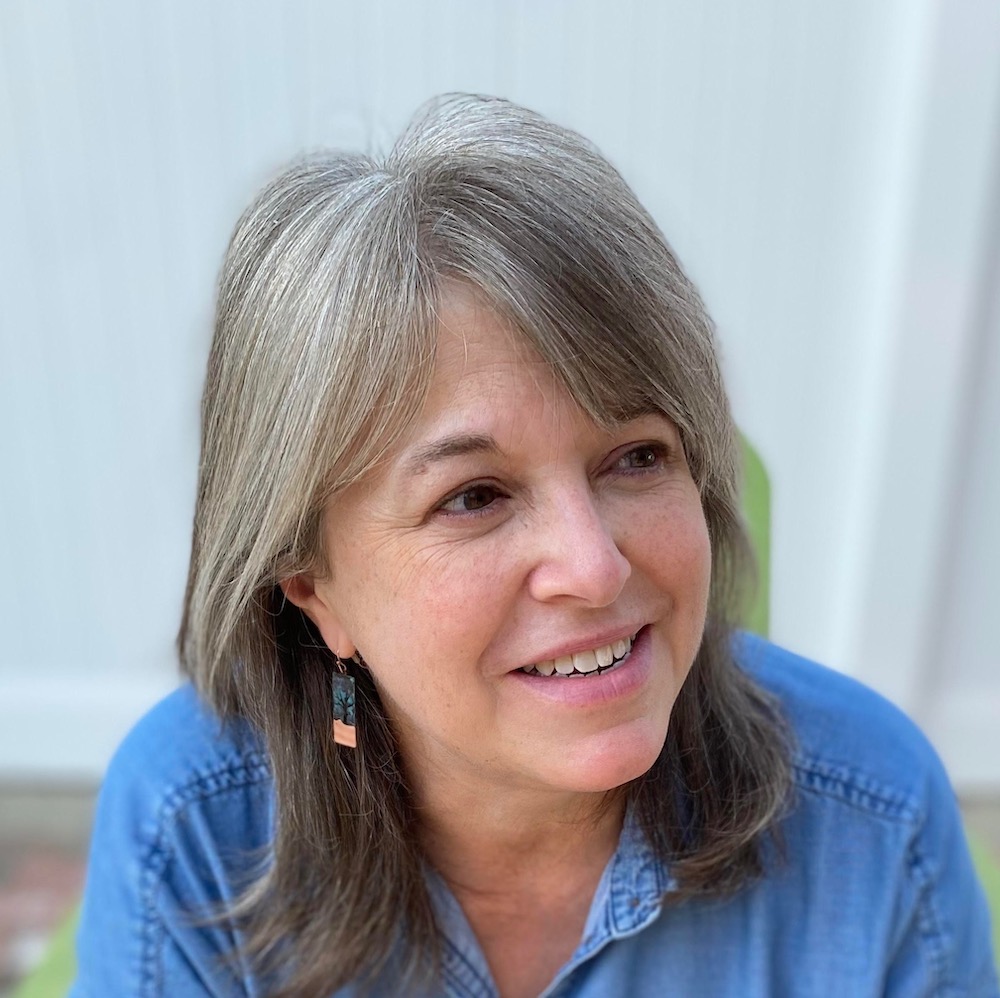
“. . . the gift of this new form enabled me to write during a weary time . . . what a good container for grief it has been.”
I drafted my first “lost notebook” poem during Thanksgiving weekend in 2021. I remember being surprised by the fragmentary, associative form the draft took, because I’ve always been a writer who’s interested, maybe too interested, in controlling syntax. I spend a lot of revision time moving clauses around, inserting and removing punctuation, and generally attempting to micromanage the reader. Not, I should say, because I believe I can steer them to one particular experience, but more like a chess player trying to envision many possible outcomes for each choice.
I had been thinking about something the poet Craig Arnold wrote in Volcano Pilgrim, the blog he started in March 2009 to chronicle his trip to hike volcanoes in Japan. He wrote his entries in the second person, embracing the slightly self-conscious quality of a travel diary: “As you break the surface of whatever dream you were in the middle of,” the entry for March 21 reads, “it comes to you suddenly that you have left some of your belongings on the plane, in the seat-back pocket: a thin notebook and a Japanese phrasebook.”
Ten days later, the airline finds and returns the notebook:
That trip ended tragically with Craig’s death in a hiking accident on the volcanic island of Kuchinoerabu-jima at the end of April that year. We were in a poetry writing class together in college, and I think about him often—a line from a poem, a brief memory, or something I hear in someone else’s work. The story about the notebook is one of the fragments that has stayed with me.
I assumed that a poem playing with the form of a notebook page would be a one-off; the original title of “From the Lost Notebook 1” was simply “From the Lost Notebook.” But I drafted four more before the end of that year and for a couple of years, almost every poem I began seemed, if not to begin, at least take a detour through the lost notebook. And many of them were lost notebook poems, combining the forms of notebook entries (fragments, jottings, quotations, notation styles) with the forms of poetry (lines, stanzas).
Although I do keep notebooks, I also keep a writing journal on my computer, and searching this for mentions of writing the poems, I’m struck by how many times the word “lost” appears. In late 2021, when I drafted “From the Lost Notebook 1,” loss was more than usually general—the losses of the COVID pandemic, of people and places and customs and time. And it was also specific: Reading through my 2021 writing journal, I see grief for friends, my father-in-law, two of my students who lost parents. I had returned to in-person teaching that fall, with teenaged students who had lost months of social development, along with much else, whose facial expressions I couldn’t read through their masks, and who often spoke so low I could barely hear them.
When I was writing the poems, it seemed to me that the conceit of the lost notebook offered me a lower-stakes way into drafting new work. I could put down images, phrases, and thoughts without knowing how or whether they would connect to one another. I could still obsess over punctuation and line breaks, but with less pressure to achieve an airtight coherence. I don’t think I understood how much I needed that, how the gift of this new form enabled me to write during a weary time, or what a good container for grief it has been. I’m grateful to NER for giving a home to three of these poems, including the very first one I wrote, and to Jennifer Chang for telling me what she saw in them. I’m grateful to Craig, who has been gone now for more than fifteen years—another loss, for readers as well as for his family and friends. And I’m grateful for poetry, for the way it always keeps surprising me, even when I am the one who is writing it.
Nan Cohen is the author of two poetry collections, Rope Bridge (Cherry Grove Collections, 2005) and Unfinished City (Gunpowder Press, 2017), and a chapbook, Thousand-Year-Old Words (Glass Lyre, 2021). “From the Lost Notebook” poems have appeared in Bennington Review, CCAR Review: The Reform Jewish Quarterly, Louisville Review, The Night Heron Barks, and Tupelo Quarterly. A past recipient of a Wallace Stegner Fellowship and a Literature Fellowship in Poetry from the National Endowment for the Arts, she lives in Los Angeles and serves as the co-director of poetry programs for the Napa Valley Writers’ Conference.