“Though ‘The Manifest’ is my poem of Idaho written in Idaho, someone else wrote Idaho long ago. Thus the eponymous poem is not only anonymous but an exquisite corpse, a shared writing of the world . . .”
My poem from NER 47.1, “The Manifest,” is titled as such for the resonance of “manifest” in the imperial landgrabs of Manifest Destiny and the embedded sound of “manifestation,” an act (and not recounting) of making something. The title also carries the idea of “a manifest,” a list. And as the political and alchemical connotations of these terms suggest, “The Manifest” attends to questions of authority and authorship.
I was writing in the managed but majestic ecosystems of northern Idaho where the boundary between environmental economy and itinerant personal agency is pervasive. Privacy has priority; the public is hemmed by waves of wheat as well as “experimental groves” of pines destined for logging. And in the massive swaths of forestry and agriculture, and because their scope is total and rational, determining and limiting, what I sought as a counter was a speaker centerless to this sustaining system.
I was living the closest in my life to designated wilderness and I felt the way to get into it was not to write about it but rather of it, in some ongoing sense. To do otherwise, to write a poem of commentary or memory, would be both an imposition and a resourcing of something that does not consent.
So the word “eponymous” came to me, as did the idea to write an eponymous poem that doubles for its subject, a poem pronouncing its predicament without presumption on the land. A poem that receives its matter such that it may stand for it and not merely represent it. My name stands for me as “The Manifest” could stand for a midsummer ridgecrest on Moscow Mountain between a clearcut hillface and cell towers at the summit, its setting a field of wild gravel and humid weedsdust drifting bugs.
And to be eponymous these words are dormant. “I” must be dormant. The poem itself a dormancy of agency swept briefly by the subject underhand. Thus the listing aegis of “The Manifest”—an itemizing of “mudflats hoofprints / cactus swishing / firs in cloudless light” against the pressures to conscript our observations for thematic gold, a timeliness and opting to forgo a sense of poetry as a bumper crop of past experiences, “recollections in tranquility.”
If my poem is an open and receptive field, receptive as the earth receives its harms and salutations, and if what I glean from land is piecemeal and translated prior to my being there, how to subscribe myself to the world as I see it, as I come to it, after disasters of strip mining, logging, and expulsion? Though “The Manifest” is my poem of Idaho written in Idaho, someone else wrote Idaho long ago. Thus the eponymous poem is not only anonymous but an exquisite corpse, a shared writing of the world.
We are in a moment of authority, of poems correcting and demanding authority, a moment of insistence about the occupations and pollutions of our state. And our language is privation, a privatude that elicits or conveys political action or witness. But what of my authority, may I lose it, to go ghostwritten empty-handed? What I wanted with “The Manifest” was not a poem that incited through its insights or impressions, or took land as resource or vehicle for my thoughts. “The Manifest” is a make and not a model of north Idaho, a seeping through the terms of writing for something focal to that place.
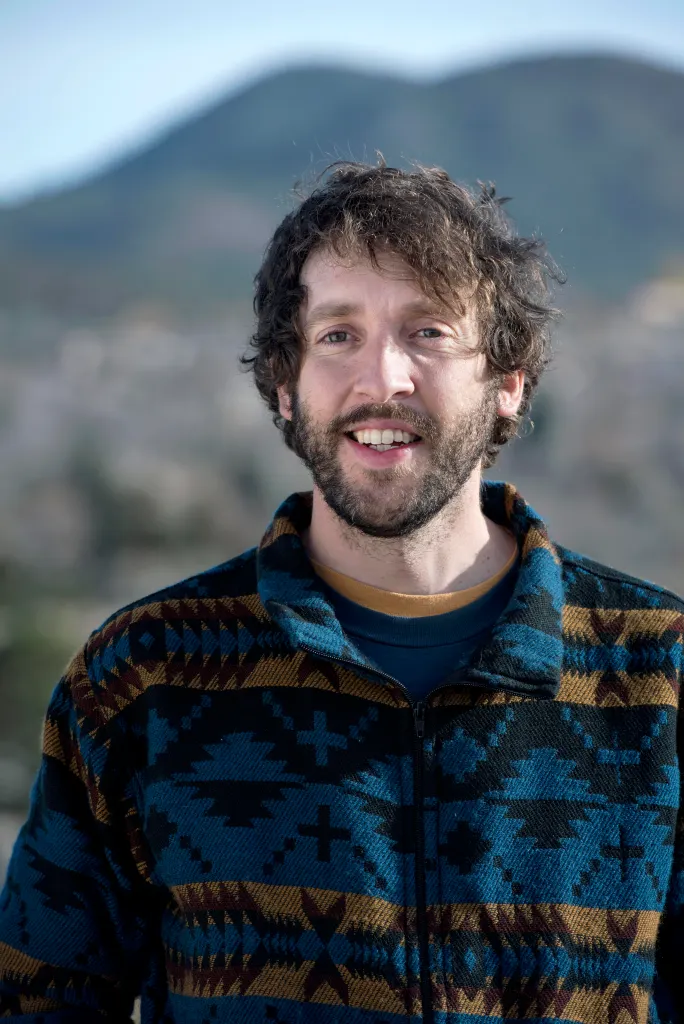
Oscar Oswald is an assistant professor of creative writing at New Mexico Highlands University. His first book, Irredenta (Nightboat Books, 2021), explored the visionary polemics of the pastoral mode. He manages the recently revived New Mexico Review and has also served as assistant editor at Noemi Press and as poetry editor of Witness. His poems have been published in Antioch Review, Seneca Review, Interim, EPOCH, New American Writing, Fence, Colorado Review, Lana Turner Journal, Denver Quarterly, Annulet, and VOLT, among other outlets. He has a PhD in English and Creative Writing from the University of Nevada Las Vegas.