Tabish Khair | Literature & Democracy
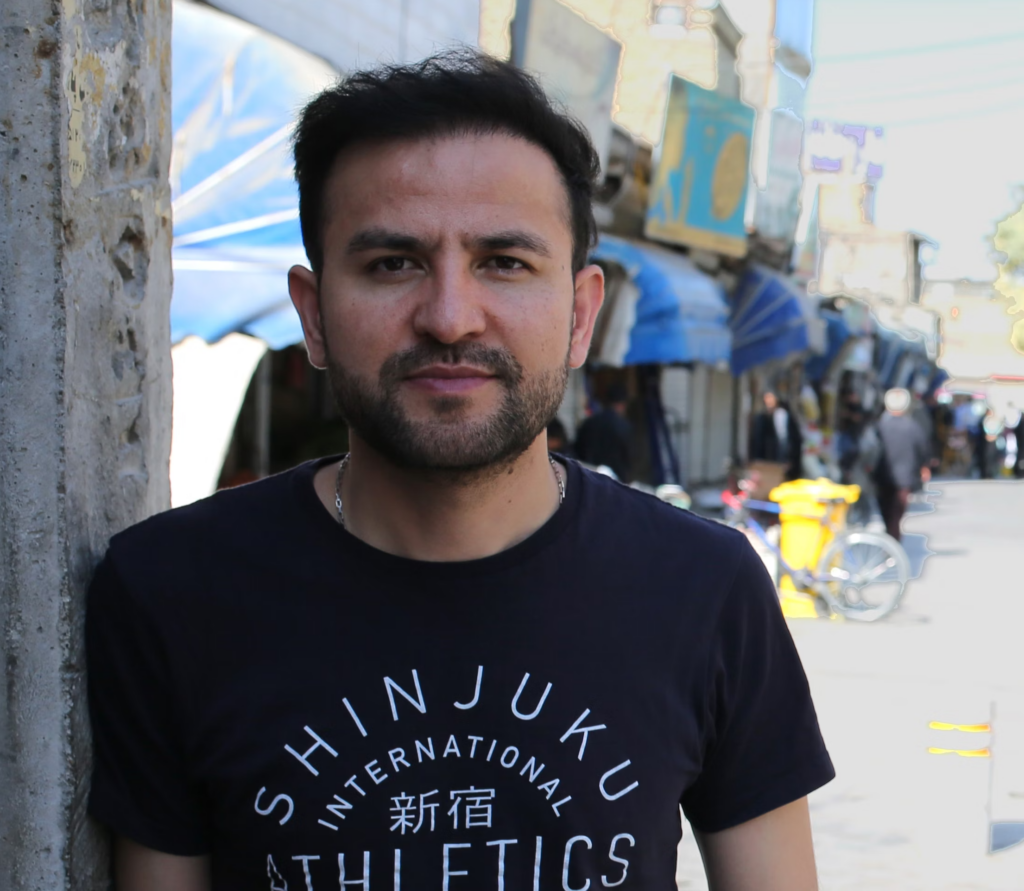
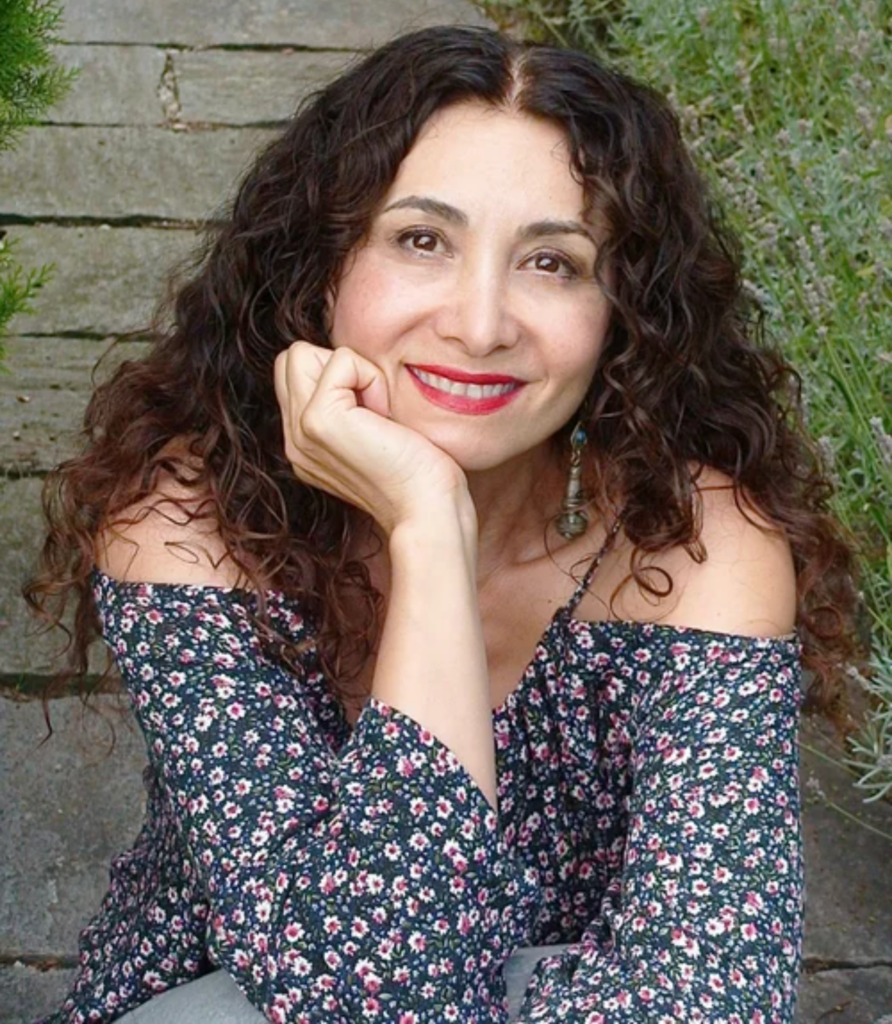
Elyas Alavi (left) & Sholeh Wolpé (right)
Sholeh Wolpé: You were born in Afghanistan, lived in Iran for nearly two decades, and then immigrated to Australia. You’ve moved through multiple cultures and geographies. Yet, as I was translating your poems, I was struck by how they resist becoming “about exile” in a straightforward way, and how movement altered not just what you write about, but what you believe language can hold—or fail to hold.
Elyas Alavi: Yes. These movements changed not only the subjects I return to, but also my relationship to language itself. Poetry first came to me when I was young in Mashhad (Iran) as a strange kind of freedom. I felt that with words I could give shape to a world that was difficult to speak about directly. But displacement also taught me that there are memories, fears, and fractures that resist being fully held in a sentence.
When I moved to Australia, I felt isolated in some ways, as the familiar circle of poets and writers around me was suddenly no longer there.
SW: Yes, I know how that feels. Suddenly everyday language feels different.
EA: Exactly. That affected my poetry. Both negatively and positively. For a period of time, I wrote fewer poems, and they became more personal. I also spent more time making visual art. But even when I work in other forms—especially drawing and painting—I still think like a poet. What’s important to me is to remain honest. Migration gave me new themes, but it also changed my sense of what poetry and art can hold, and what they must humbly admit they cannot repair or contain.
When you think of memory—memory as something you must keep returning to, like the abacus in your memoir Abacus of Loss—do you feel you are preserving it or trying to loosen its hold on you?
SW: I think it’s both. There are memories I hold onto because they define me—and others I return to because I’m trying to release them. But even release is a form of return. And sometimes what we cannot release enters us differently.
I think in both our writings, tenderness and violence often exist in the same gesture. The act of touching carries the possibility of harm.
In several of your poems the desire to touch becomes the desire to cut, to possess, to consume. Do you see this as a reflection of war’s infiltration into the private sphere, or as something more elemental in human desire itself?
EA: I think that tension comes partly from war entering the most intimate parts of life. When violence becomes ordinary around you, it doesn’t stay outside the home or outside the body. It enters memory, touch, and even the imagination. It moves into the home, and even into the language of love. For example, in one of my poems, “I Do Not Believe,” the wish for the beloved’s death is strangely intimate—not by bombing or sudden violence, but quietly, with the chance to close the eyes and hold the body. That tenderness is already shaped by fear.
But I don’t think the answer is only war. Desire itself carries shadows, longing, possession, jealousy, and the fear of losing someone. Poetry allows those darker currents to surface without turning them into a moral lesson. What interests me is that uneasy closeness where love and harm begin to echo one another.
SW: Yes, I think that’s where witnessing begins—staying with what is difficult to see. But we live in a world saturated with images of suffering where the act of witnessing risks becoming another form of violence.
EA: I am very conscious of that. We live in a time when images of suffering circulate quickly and are consumed almost as a habit. I do not want to add to that numbness. What matters to me is not the spectacle of a broken body, but the human weight around it: the absence, the witness, the search, the names, and the intimacy that remains after public attention moves on.
Poetry allows for another kind of witnessing because it doesn’t need to show everything directly. It can work through fracture, silence, and restraint. Sometimes dignity lies in not describing the body too fully. The challenge is to stay close to grief without turning it into something that can be easily consumed. In your poetry, Sholeh, I’ve noticed how you turn the experience of loss into a kind of poetic accounting.
SW: Well, I think it is only through loss that we find what we are left with, and what we have gained. What is happiness if you have never tasted loss?
We are solitary creatures. We view the world from inside of ourselves. And when we are in a meditative state, the juxtaposition of what is out there, and that moment’s internal experience, can have a profound effect on our psyche and on how we see the world.
Let me say that a bit differently: What does blue mean unless it is thrown against yellow? If you put gray in the middle of olive green, it will look like a different color than if you put it against lavender. Try it. Each time your eyes will see the gray as a different color. So, I ask: What is “reality”? Context and background alter how we see things. Whatever we hold inside of ourselves comes from what we gather and process from our immediate surroundings—the kind of books we read, the movies we watch, the social media accounts we peruse, the human interactions we have, etc. What does any of that mean when thrown against what exists outside of us, unprocessed by our inner psyche? It’s almost surreal.
EA: For me, the surreal is not a departure from reality. It is often a way of approaching reality when reality itself has become unbearable or morally distorted. A strange image can sometimes tell the truth more precisely than a realistic one because it carries emotional truth, not just visible fact.
SW: Yes, I have found a recurring tonal tension in your work: The language is simple, almost conversational, yet the images are destabilizing.
EA: Yes, simple language and destabilizing images live together in my work. The language may remain close to conversation, but the image opens a crack in what we call “normal.” Sometimes the surreal does not make reality less visible; it makes visible the part of reality that ordinary language has learned to hide. I should also add that both my poetry and my art are strongly shaped by dreams. Many images come from dreams or dreamlike states, which naturally bring a surreal quality to the work.
Do your memories come to you more as clear narratives, or as fragments and images that you have to assemble?
SW: Fragments. Always fragments. The narrative is something I build afterward, almost as an act of survival. In the end, like the sum of any life in nuggets of memory, everything comes into focus, and despite the loss and sadness, exile and displacement, love and betrayals, I find myself not in despondent darkness but a light-filled, hopeful place I call gratitude.
EA: That’s a good place to end up in.
SW: In your work, Elyas, repetition feels almost ritualistic. Is it resistance, mourning, or something closer to how memory itself behaves?
EA: Repetition, for me, is very close to the behavior of memory under pressure. Trauma does not arrive once and disappear. It returns, circles back, and asks the same question again in a slightly altered form.
SW: So it’s a formal choice.
EA: In a sense, yes, but it’s also an honest rhythm of psychological life. Repetition can hold mourning, resistance, and even something close to incantation. When something has been denied or erased, repeating it becomes a refusal to let it disappear. Some questions live through recurrence. They survive by being asked again.
Are there questions in your own life that you feel you are still asking, again and again, without resolution?
SW: Yes. And I’ve come to understand that some questions are not meant to be resolved. They are meant to keep us company along our life-journey.
EA: I see that in your memoir-in-verse. Sometimes the movement is spiral, which is open-ended, circular. You return us to the same door, except the door now opens onto another landscape.
SW: And that sense of return, I think for us both, extends to our movement across different art forms. For me, it’s poetry, drama, translation, and fiction; for you, poetry, visual art, and performance. We both circle the same questions from different angles.
EA: Yes, the different mediums often circle around the same underlying questions. They are more like different pressures applied to the same unresolved wound. Across poetry and visual art, I keep returning to core themes such as displacement, violence, memory, and belonging.
SW: And as you said, the door opens to a different vista, a different perspective.
EA: Exactly. In my work, what changes is the kind of encounter each medium allows. Poetry allows closeness and quietness. Installation and visual art create spatial experience. Performance introduces the body and time. Another aspect is language itself. I still write only in my mother tongue—Farsi/Dari/Persian—which is not accessible to many readers and depends heavily on translation and the availability of translators like you. Because of that, visual art can sometimes connect more directly with a wider audience. But even in my exhibitions, poetry is usually present: sometimes as lines within the work itself, and sometimes as the impulse behind the whole body of work. Do you ever feel that one form allows you to come closer to “truth” than another?
SW: I think each one succeeds and fails differently. And that difference is necessary. It keeps the work alive.
EA: Yes. Especially in the space we live in, you and I, between cultures and languages.
SW: True. Language plays a major role in the construction of the identity of a migrant self, and in the interpretation and reconstruction of memory.
Language frees us to move across cultural borders, but also to move fearlessly across art forms and genres. In Song of Myself, Walt Whitman writes: “I am large, I contain multitudes.” That’s how I feel all the time when it comes to my art. I’m not afraid to experiment with language, to explore it. And more importantly, I am not afraid to fail. Or be rejected, or censored.
EA: Let’s talk about love.
SW: Twelfth-century Iranian Sufi mystic poet Attar writes: Love is fire / Mind is smoke. / When love arrives, / Reason flees.
EA: I love Attar. Thanks for translating him into English. The Conference of the Birds is a masterpiece.
SW: Yes, translating Attar changed my life and soul. But as I was translating your work, Elyas, I noticed that love in many of your poems exists inside violence. Is it resistance, or is it already shaped by the world that wounds it?
EA: In my work, love is inseparable from history. It exists inside broken conditions, so of course it carries some of that damage. War, exile, and fear change how we attach to one another. Even tenderness may arrive already wounded.
And yet love can still carry resistance. Not because it escapes violence, but because it persists despite it. To remain capable of tenderness in a brutal world is already a small act of refusal. Poetry allows that contradiction to remain visible. Do you believe love transforms us—or does it simply reveal who we already are?
SW: I think it does both. It reveals—and then it asks whether we are willing to change what we see. We want to be loved, or be transformed by love. That’s something I learned from Attar. Which brings me to my final question. Why write at all? Is it to understand, to preserve, or simply to survive?
EA: I write for all of those reasons: to understand experience, to preserve it, and sometimes simply to survive it. I have lived through traumatic events, including witnessing the suicide attacks in Kabul in July 2016, when more than ninety protesters were killed. Poetry became one way for me to process that experience psychologically, to live with it, and to find some meaning in continuing.
SW: I think poems that are written in the middle of any catastrophe later require distance. Absorption. Return. Loss must be touched, carried, spoken to. Only then can it enter language. As it does in your poems.
It was my pleasure to give them life in the universe of yet another language.
Read Three Poems by Elyas Alavi, translated from the Persian by Sholeh Wolpé
Elyas Alavi is a poet, curator, and visual artist with a multidisciplinary practice that spans painting, sculpture, installation, moving image, poetry, and performance. His practice often examines the complex intersections of race, displacement, gender, religion, and sexuality accounting for hyper-invisibilities and troubling received notions of culture and belonging. He has received commissions from Australian SME galleries, ARIs, and biennales including Sydney Biennale, ACE, Hyphenated Biennale, TarraWarra Biennale, Griffith University, Granville Arts Centre, Next Wave, Nexus, POP, and UTS. Alavi has also published three critically acclaimed poetry books. Translations of his poems have appeared in publications such as World Literature Today and PARSE Journal. He is the co-founder of Gholghola Collective and a member of the Eleven Collective. Alavi graduated with a Master of Visual Arts from the University of South Australia in 2016 and in 2020 completed a Master of Fine Arts at Chelsea College of Arts, University of London.
Sholeh Wolpé is a poet, writer, and librettist. She was born in Iran, writes in English, translates from Persian, and lives in Los Angeles and Barcelona. Her published work includes seven collections of poetry, several plays, five books of translations, and three anthologies, as well as texts and librettos for the choir and opera. Presently, she is the Writer-In-Residence at the University of California, Irvine. Her translations include The Invisible Sun (HarperCollins, 2025), selected by S&P as one the most Spiritual Books of 2025 and longlisted for the 2026 PEN Translation Prize, and The Conference of the Birds (W. W. Norton, 2017), both by the twelfth-century Iranian Sufi mystic poet Attar; and Sin: Selected Poems of Forugh Farrokhzad (recipient of Lois Roth Translation Award) by the twentieth-century Iranian rebel poet. Wolpé’s recent poetry collections include Abacus of Loss: A Memoir in Verse (University of Arkansas Press, 2022), and her latest work of prose, “Eye for an Eye,” appears in Iran +100: Stories from a Century After the Coup (Comma Press, UK, 2025). She is the recipient of the Opera America Discovery Award, the PEN/Heim Translation Fund Grant, Midwest Book Award, and the Lois Roth Translation Prize.
The fifteenth installment of our “Literature & Democracy” series was curated by NER international correspondent Ellen Hinsey. This quarterly column presents writers’ responses to the threats to democracy around the world.
Subscribe to NER