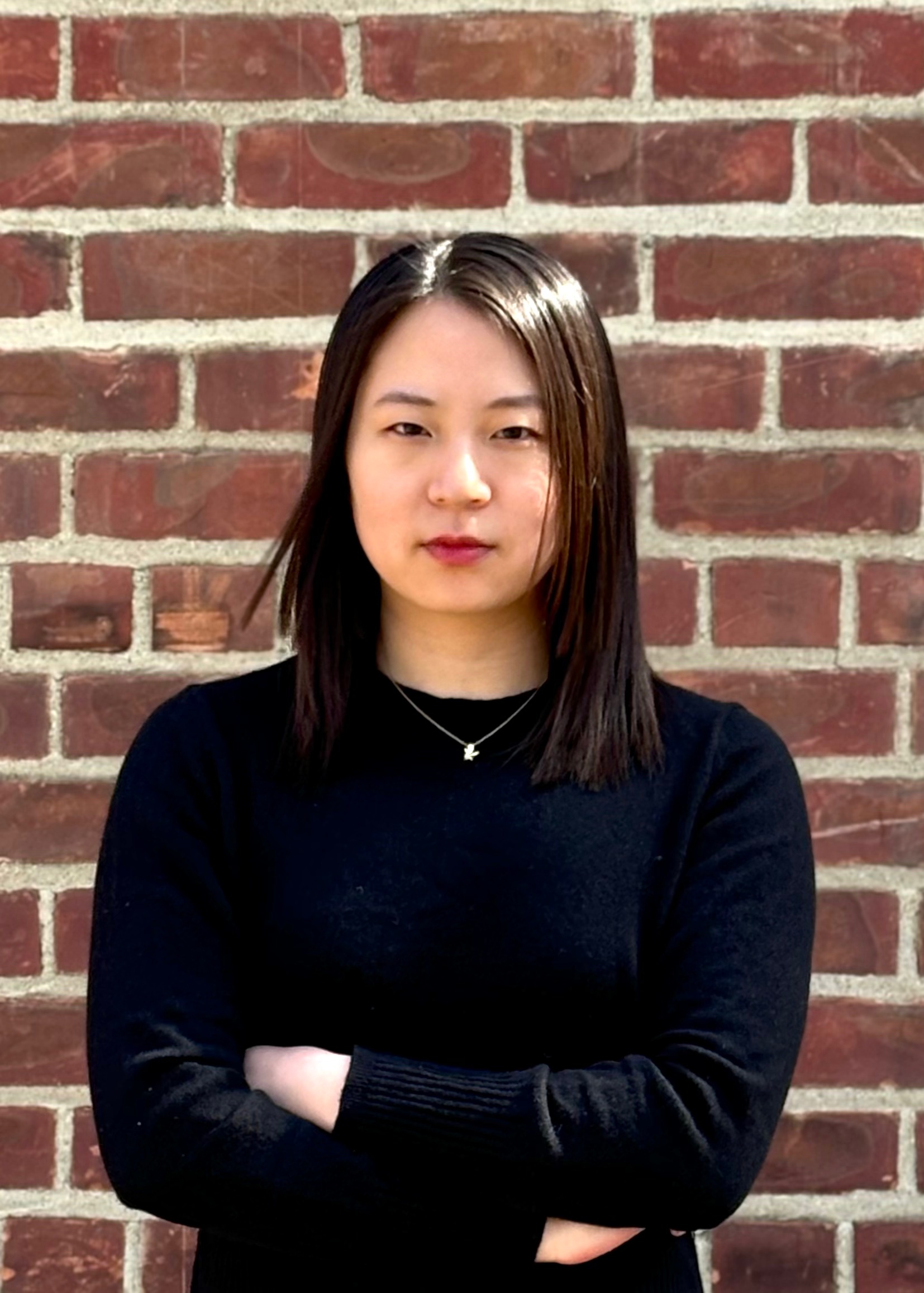
Staff reader Dana Lynch speaks with NER 47.1 writer Elizabeth Lee on untranslatable language, the parasocial nature of mukbangs, and crafting a self-conscious point of view in her story “AYCE.”
Dana Lynch: Where are you in the world, and what does your writing life look like right now?
Elizabeth Lee: In an oddly prophetic twist, I recently moved to the Seattle area, though at the time that I wrote this story I was still in the first year of my MFA at the University of Michigan. Like the narrator, I work in tech, although I’m in the office five days a week and lacking the cushy home office setup. A lot of my writing life these days could be described as intermittent; I read on my coffee breaks and write for an hour or two in the evening to the on-and-off accompaniment of rain. My creativity tends to come in waves, too; I keep a digital notebook on my phone so I can jot ideas down at a moment’s notice, and I’ve been known to write a short story over the course of six hours then not write a word for weeks.
The difficulty for me these days is balancing my creative energy with an inflexible work schedule. Some nights, I have a hard time putting down my laptop; on others, I struggle to pick it up to begin with. Right now, I’m revising a novel, which I’ve found works quite well with my current cadence. I aim for a chapter a night, though I try not to hold myself to a strict schedule. I suppose you could describe everything—my geography, my habits, the writing itself—as a work in progress.
DL: I wanted to talk about language in this piece. There are two instances of Hangul in this story and both of them encourage eating. By the time I finished reading, “더먹어” became a crucial part of this story for me. It was, at its core, an untranslatable phrase. I often consider the limits of the English language in prose. Did you always know that these words had to stay in Korean? Did you try them in English?
EL: Thank you for this careful attention to the prose! I knew from the start that “더 먹어” had to be in Korean, which is interesting because I also include a lot of romanized and translated words. I wanted to approach language with diasporic naturalness in this piece; Candace is very much an American, though she is obviously strongly influenced by her Korean upbringing, values, and language. To that effect, I chose to interchange various word forms in a way that feels cognitively jumbled, which reflects both Candace’s mental state and the constant linguistic switching common to those who exist between cultures. That’s how I ended up with romanizations like “galbi” and “samgyupsal” lined up beside fully translated words like “brisket” and “pork jowl.”
But to answer your question, I tried translating “더 먹어” once early on, but I immediately changed it back. It does feel untranslatable—I think what is most apparently lost is the sense of care imbued in the phrase. Food is a violence that Candace incurs, whether through overwhelming or withholding it from her own body, but it’s also a very Korean form of care. I wanted to walk that fine line between destruction and preservation, which is also exhibited by the change from “더 먹어” at the beginning to “얼른 먹어” by the end. The former can be interpreted in reference to quantity, speaking to Candace’s tendency toward overload, while the latter invokes more of a sense of urgency in sustenance or enjoyment.
DL: There’s a scene where Candace is binging on Ben & Jerry’s, dumplings, ramen, and Oreos. All these flavor profiles reminded me of a crude version of banchan. What was it like crafting this scene and Candace’s search for satiety?
EL: That’s such a clever connection! What I focused on with this scene was imbuing variety: hot, cold, crunchy, chewy, sweet, salty—and perhaps this is why it resembles the myriad options in banchan. In covering a broad range of foods, Candace’s insatiable hunger becomes more clearly defined, with the added bonus that it was very fun to write! I’m drawn to food in stories because they appeal to the senses; if I mention a strawberry, the reader can immediately taste, smell, feel, and see it in vivid detail.
With this story in particular, I was interested in exploring the mukbang, which has become such a widespread phenomenon not only in Korea but across the world. In a way, this entire story is a mukbang; we witness Candace work her way through several Korean barbeque meals as well as the entire contents of her pantry. I wanted to imbue the prose with the literary equivalent of ASMR by highlighting the sounds and textures of Candace’s consumption. At the same time, I was interested in critiquing the mukbang and our fascination with it. Obviously some Korean mukbang rules are quite stringent on their own, but I was more curious about the parasocial satisfaction involved in it. There’s the vicarious contentment of eating, for one thing, but there’s also an underlying search for connection—chatty mukbangs often lend viewers the sense that they are sharing a meal with a friend.
I think it’s this loneliness that ultimately pervades Candace’s every thought and meal. She has isolated her own self-image to the point that the people around her can’t break through, and her insecurities are literally eating away at her. This psychosomatic link actually goes back to what we were discussing about language, and how food is inherent to Korean expressions of care. Candace wants to feel full/whole, but she tries to fill up on external sustenance rather than addressing her internal needs.
DL: Throughout “AYCE,” we read Candace’s and Sam’s perspectives on their relationship through Candace’s point of view. It presents a very “he said, she said” feeling through an unreliable narrator. Did you always know that you wanted this to be the POV for the story? How did you approach revision?
EL: This story actually began with the his/her conceit—I wanted to challenge myself structurally and see where it would lead. As the writing progressed, I found the framework instrumental in showcasing Candace’s self-consciousness in relation to Sam. She constantly worries about how he perceives her, then generalizes her assumptions into how everyone perceives her. These insecurities are also compounded by the fact that Sam is quite self-assured; the differences Candace identifies become the lens through which she views Sam viewing herself. There are so many layers to it!
I knew two things had to happen with this narrative structure. First, it had to be acknowledged that the story isn’t relaying two distinct POVs, but rather two perspectives constructed within Candace’s head. This is where the section beginning, “In his version, I am making up his version in my head” came from. It was important to me that Candace’s limited scope was acknowledged by the story in order to make clear just how strongly the narrative has been guided by Candace’s beliefs. I also knew that this innate tension between the his and her versions needed to come to a head at some point. This was a more difficult fix. In my original draft, the long string of “her version” sections continued to the very end, but I was never satisfied with this ending. I received several suggestions to converge on an “our version,” but given the solo journey Candace embarks on, this didn’t feel right, either. During the editing phase, I found that giving Candace the belated possibility of an “our version”—a what-if scenario, of sorts—worked to resolve this tension while allowing Candace a moment to reflect on how she was forcing her interpretation onto the narrative. At that point, the focus on “versions” stops altogether, as Candace focuses less on how she is perceived and more on who she has become.
DL: You mentioned that there was a draft where the “her version” sections go until the end. Did you know that you wanted this story to end with Candace and her mom or did you play around with other endings?
EL: This was definitely one of those stories where I had no idea where it was going until I was already there. When I wrote the initial draft, I naturally returned to the doenjangjjigae, and thus the mom. In retrospect, this decision seems inevitable. For one thing, I couldn’t spurn this staple of Korean cuisine! But it also makes narrative sense; Korea has a fraught history with food and beauty that informs Candace’s understanding of how they relate to her body. Her mom is fundamental to this relationship, being the channel through which Candace absorbs and reinterprets Korean standards and values. By the end of the story, Candace reaches a point where she needs to confront her histories, both inherited and lived, in order to move forward.
There were so many directions the ending could take once I landed on the doenjangjjigae as the concluding image, and I was very intentional about the resolution—or lack thereof. With a story involving disordered eating, tying it up too neatly seemed dismissive, but I also didn’t want to leave the reader drained and dissatisfied. I’m a big fan of inflection-point endings which, rather than closing out the story, open it up to countless possibilities. It’s an opportunity that seems especially fitting for a character like Candace, who spends so much of the story feeling cornered by weighted expectations. I wanted to give this sense of—not hope, per se, but rather the possibility of hope. It goes back to the “versions,” perhaps. There is a version where Candace remains exactly the same, but there’s also one where she paves a new path for herself, and countless others in between. I thought it best to leave her at that point of infinite potential.
DL: My final question has to do with what’s next. What are you working on? Are you reading a really good book right now? Are you working on a novel? Thank you for this wonderful discussion.
EL: Thank you for such a lovely conversation and for the care and attention you’ve given this story! Work has been busy, so I haven’t been reading as much as I’d like. I’m slowly making my way through Danielle Evans’s first short story collection, Before You Suffocate Your Own Fool Self. I loved her second collection, The Office Of Historical Corrections, and it’s fascinating to witness her earlier work—and its persisting relevance—through the lens of our current sociopolitical climate. I also recently finished Moderation by Elaine Castillo and am halfway through Audition by Katie Kitamura.
I’m currently revising a novel and I have a short story collection on the back burner. A lot of my recent efforts have been geared toward editing, so lately I’ve been itching to start something new—the untimely writerly curse that afflicts us all. I have a few ideas marinating in the back of my mind, so hopefully they’ll emerge on the page sometime in the near future.
Elizabeth Lee is an MFA graduate of the University of Michigan. She holds a BA from Columbia University and works as a software engineer. Her work has been nominated for the Pushcart Prize and can be found in Electric Literature, Witness, Bellevue Literary Review, and Quarterly West. She is currently working on a novel.
Dana Lynch is a biracial Korean American writer based in New York City and Pittsburgh. She works as a staff reader for the New England Review and is a first-year writing MFA candidate at Columbia University.