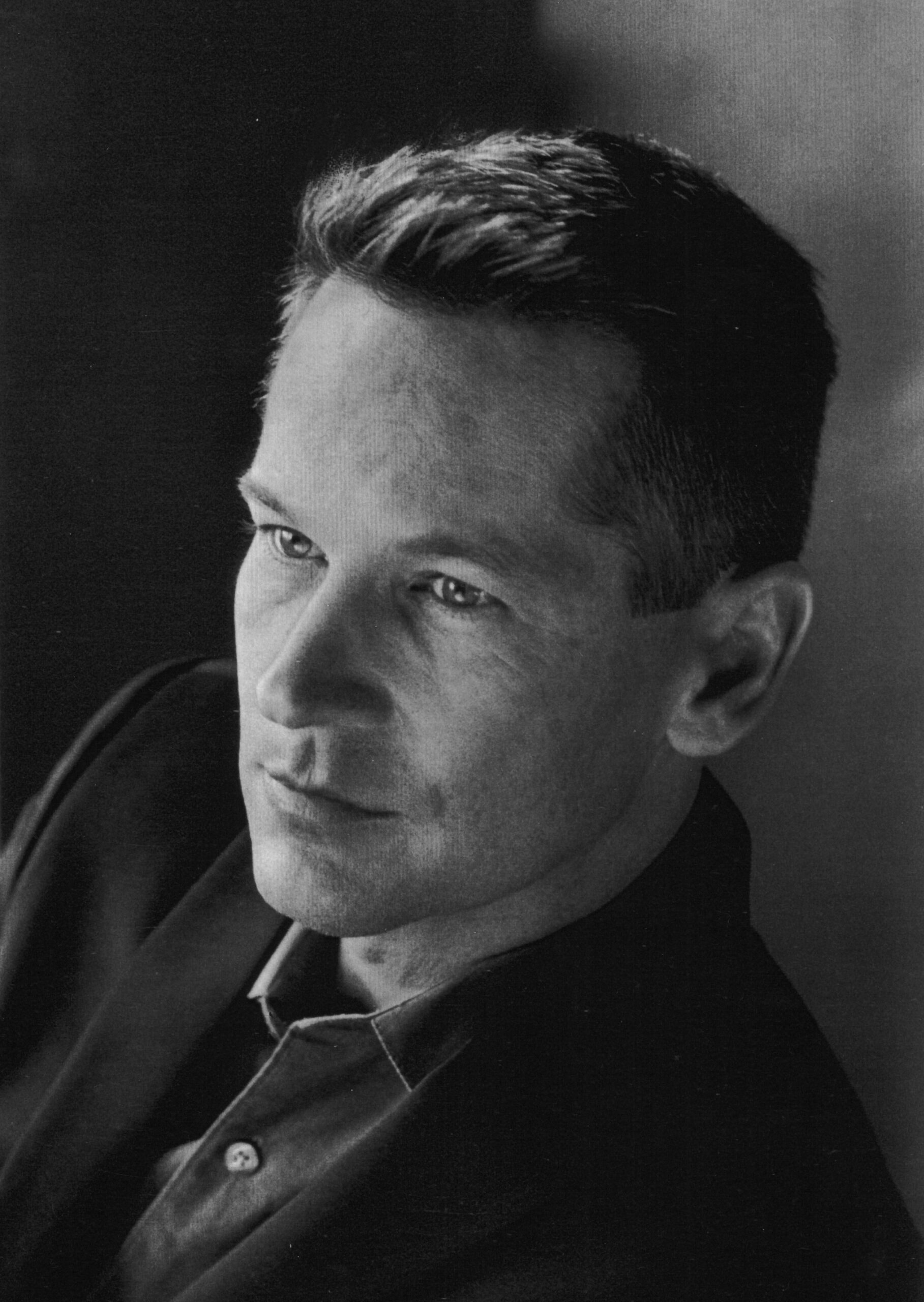
Staff reader Nick Bertelson talks with poet Patrick Phillips about writing the dead beloved, the kinship between poetry and ministry, and the sacred and the profane in his poem “Shit Story” from NER 46.3-4.
Nick Bertelson: Your poem “Shit Story” made me think about “shit” in literature. There’s that chapter in Ulysses where Leopold Bloom wipes with newspaper. There’s that James Wright poem about manure that ends with “I’ve wasted my life.” And apparently it’s a big topic in the world of haiku, at least according to Masaoka Shiki. So, to your mind, what are some great instances of shit being expounded upon in literature?
Patrick Phillips: Ah, look how I’ve elevated the conversation at NER! Your examples are great, Nick, and I, too, love Bloom’s read/wipe with a prize-winning story, and all those haiku full of bird droppings and dung. And yes, how easy to forget that Wright’s famous revelation begins with a vision of . . . horse shit.
As far as other instances, my mind leaps to an oldie but a goodie: a moment in The Canterbury Tales when the Pardoner strong-arms his fellow pilgrims into buying a bunch of bogus holy relics, then gets a tongue-lashing from Chaucer’s Host:
I didn’t get that deep into the fundament in “Shit Story,” but Chaucer was one of my earliest teachers when it comes to the hi-lo game . . . the way the sacred and profane not only can be intermingled in a poem, but often must be if we want to tell the truth.
NB: For someone like me who’s not well-versed in Middle English, can you explain what’s going on in this passage?
PP: Oh man . . . those lines might be too crude to summarize without cringing, so let’s just say they involve a pair of skid-marked undies, a threat of castration, and a hog turd. (For anyone into that kind of thing, there’s a modern English translation here).
NB: The baseball metaphor in “Shit Story” is spot-on—your mother playing catcher to your father. It’s so accurate, heartbreaking, and funny all at the same time. What sparked this image for you?
PP: That metaphor draws on one of my favorite quirks in baseball: the way a celebrated pitcher can lay claim to a “personal catcher,” i.e., a player who is on the roster mainly for his rapport with the ace and their winning history together. When I was a teenager, Braves legend Greg Maddux even had a set of secret signs known only to his personal catcher, Eddie Perez.
I thought of that when trying to describe my mother’s service to my father because, just like a veteran pitcher and a favorite catcher, my parents’ working relationship was ancient, intimate, and wildly asymmetrical. All my life my father performed—admired and adored—while my mother did the dirty work.
NB: I know that explaining the form of a poem can sometimes be like explaining the meaning of a joke, but without beleaguering the topic, could you talk a little about how and why you structured the poem as you did? The numbered sections feel necessary and significant, same with the seven lines per stanza. Were these formal decisions just a way to help you work through the subject or is there more to it than that?
PP: I think the shape of this poem has to do with the problem of its length. “Shit Story” is longer than usual for me, and after the earliest version tumbled out in a great flood, I knew I had too much . . . and way more than was good for the poem.
That meant I needed some kind of harrowing tool . . . some rigid formal edge that, however arbitrary, would force some choices, foreclose some possibilities, and leave parts of the story implied but unsaid—since the reader, too, has lived.
When I was revising, the seven-lined, half-sonnet-ish stanzas helped me lean the thing out, speed it up (I hope), and find a poem hiding inside the draft. I also hope they function as a form of courtesy to the reader, since this one is a pretty big ask.
NB: Could you talk a bit about your father? How did he view your craft? It often seems like poets are willing to admit that poetry is a lot like prayer, but does that cut both ways? By that I mean—did your father see it that way?
PP: My father was a gruff, sweet, bullheaded, bighearted cro-magnon of a man, and I think he was genuinely delighted that I became a poet. I know, at least, that he liked to force my books into peoples’ hands. And I do think he felt a kinship between poetry and ministry, since both are about mystery and language, and both attract people who care a lot more about love than wealth and power.
Among my very earliest memories is the sight of my father at the front of a church in his long black robe and his voice calling, “Lift up your hearts” as, all around me, people responded in unison: “We lift them up unto you, O Lord.” I remember the hair rising on the back of my neck the first time I heard that spooky murmur, and I think it was the moment when I first became addicted to language . . . to that feeling when the right words, in the right order, can send an electric jolt right through me.
NB: There is a lot of mixing the sacred (church) and the profane (shit) in this poem. How much of that was intentional and how much of it was just the truth of your life and your relationship with your father?
PP: The incontinence was as true as it gets. My mother’s daily devotion with her brush and bucket was true. His humiliation at the church he once led. All of that is drawn from the life and the relentlessness of my father’s decline—the non-negotiable fact of his approaching death—is part of what I was wrestling with in “Shit Story.”
When a family is caught in that vortex of surgeries and meds and visiting nurses and hopeless “rehab,” it starts to seem like everything is upside down. Like the sick room is real and the world out the window is imaginary. Like what’s profane isn’t the shit and the blood and the piss, but the world that wants us to pretend it isn’t happening and goes on blithely and indifferently—since, after all, dying is something that happens every day.
So I guess I wanted to somehow get all that onto the page if I could . . . to sing the unsung heroism of my mother’s caregiving and, at the same time, honor my father’s lifelong embrace of his own warring impulses and sacred profanity. He was tender and ferocious and hilarious and wild, and any poem that claimed otherwise would be an embarrassment to those who knew him well.
NB: Is it easier or harder for you to write about someone once they’ve passed, especially someone like your father?
PP: I used to claim that I wrote whatever I wanted, familial hurt and personal consequences be damned. But that, too, was bullshit, and in truth I was always very careful not to hurt my father with a poem. That means that I could not have written, much less published, something like “Shit Story” while he was alive, since it makes public the last great humiliation of his life. To have done so would not have seemed like a betrayal . . . it would have been one.
So yes, I think it’s only possible to write a certain kind of poem after the beloved is gone, because they’ve finally suffered all they’ll ever suffer, and the truth can no longer do them any harm. Margaret Atwood, in a recent interview, was asked why, after so many years, she’d finally agreed to publish a memoir. She said, in essence, “because people died.”
That’s exactly how I felt writing this poem, which describes the end of the first home I ever knew: the one my parents carried around with them from house to house, decade to decade, during their epic, loving, arduous, sixty-year carnival of a marriage.
My mother has since found a new love and started a new life, and so that version of family—in which my father and I sat around laughing and drinking and telling shit stories—is now gone for good. The only way to get back there, I realized at some point, is to write about it.
Nick Bertelson is the winner of the Gary Wilson Award for Short Fiction, and the author of the novel Eighty-Sixed from Paradise (Handcar Press, 2025). His work appears in Kenyon Review, Prairie Schooner, and descant.
Patrick Phillips is the author of four collections of poems, including Song of the Closing Doors (Knopf, 2022) and Elegy for a Broken Machine (Knopf, 2015), which was a finalist for the National Book Award. He has also written a work of nonfiction, Blood at the Root: A Racial Cleansing in America (Norton, 2016), which was named a best book of the year by The New York Times, The Boston Globe, and Smithsonian. Phillips lives in San Francisco and teaches writing and literature at Stanford University.