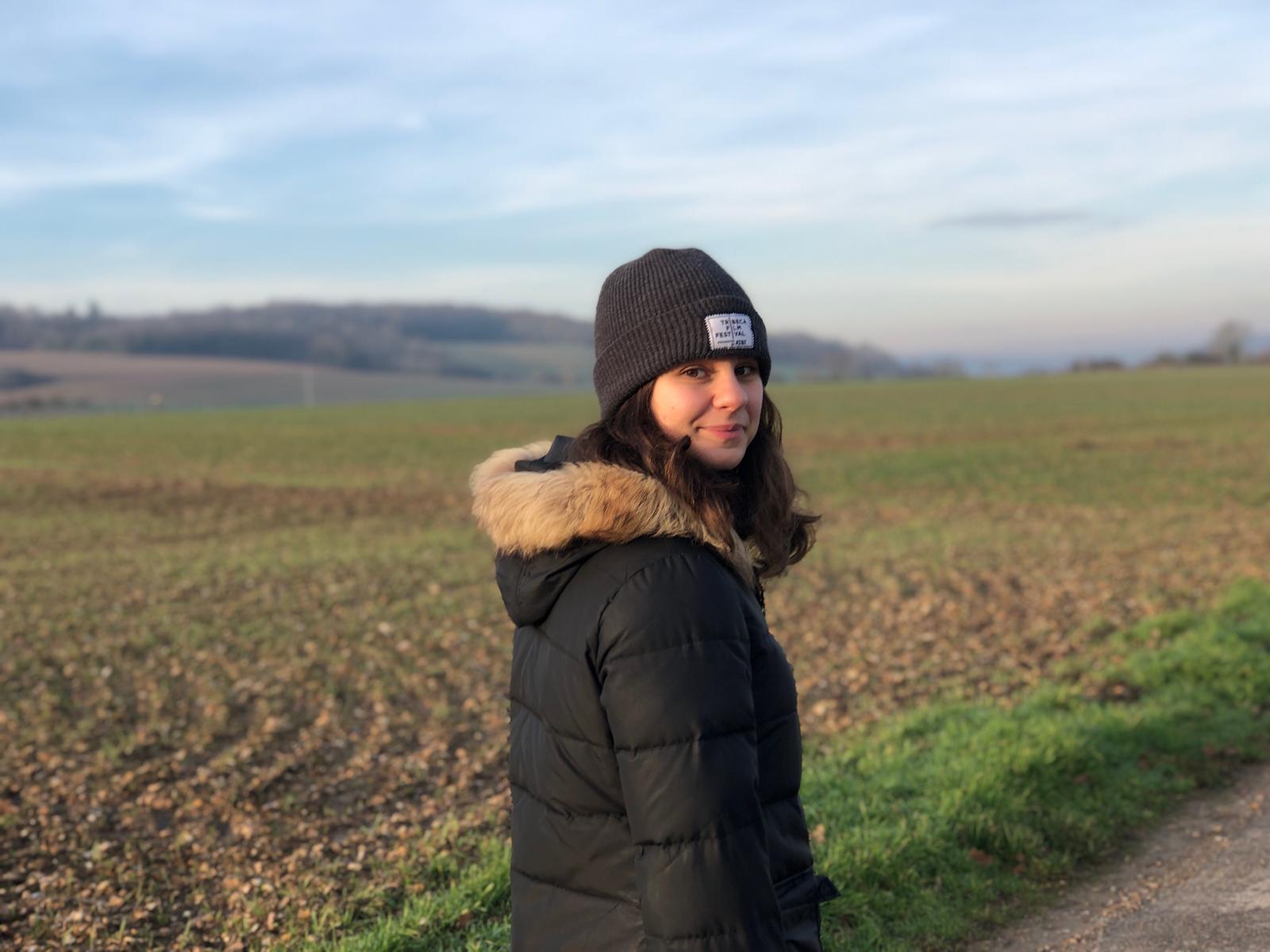
Editorial intern Aren Lau ’27 talks with former NER intern Leah Sarbib about practicality and passion, collaborative writing spaces, & taking creative inspiration from J-term classes.
Aren Lau: Where do you find yourself now, geographically and professionally?
Leah Sarbib: I’m in New York City, writing on the first season of a new Netflix show.
AL: How did you successfully avoid the college-to-corporate pipeline and stay true to your creative, artistic endeavors? (Or, do you consider your profession to be somewhat corporate?)
LS: I wasn’t really thinking in those terms when I graduated. I tried to follow a guiding principle that actually came from one of my Middlebury professors: “Proceed as the way opens.” Essentially, point yourself toward what you’re interested in and stay open to opportunities as they arise.
I’m not sure that it’s one or the other when it comes to corporate and creative. The entertainment industry is a business with an audience and a cultural context. Artists have expenses and need to make a living. Personally, my strategy has been to marry practicality and passion wherever I can. In my career, I move toward work I find exciting while also remaining realistic about what can sustain me. No matter what, I always carve out space to work on new projects of my own. That’s what I can control and what is most likely to leave me creatively satisfied.
AL: You interned for the New England Review as a Middlebury student. How do you think this experience helped shape your writing career?
LS: In lots of ways! The most tangible one at the moment is that my co-intern from NER is still a close friend and collaborator.
Reading is incredibly helpful: Reading the submissions that get in and the ones that don’t, pieces that are polished and those that are less so. My time at NER demystified how institutions review, discuss, and make decisions about unpublished work. It showed me a roadmap to becoming a professional writer. Yes, your writing needs to be excellent. But also, how can you distinguish yourself from the rest of the slush pile? Everything helps—voice, accolades. What are you specifically doing that is new and different? How are your ideas fresh, while respecting tried-and-true forms?
After we’d read, we’d meet with the editorial team to discuss the submissions. A similar type of collaborative exchange takes place in a writers’ room.
AL: Is there a common theme in your original fiction?
LS: A writer friend told me that finding your voice is about identifying the houses you haunt. I really like that. One of the houses I haunt is memory. I think a lot about the passage of time—how we encode and reflect it. And I’m drawn to characters who grapple with the invisible forces that shape our world.
AL: How do you approach identity in the stories you tell?
LS: Identity can mean so many different things. Pieces of you will inevitably make their way onto the page. Some are obvious: When I was a kid I was really into Mia Hamm and I wrote a script that takes place in the world of professional women’s soccer. Some are more subtle. One of my characters was experiencing visions of a place she’d never seen. It wasn’t until someone pointed it out to me at the Film Independent Episodic Lab that I realized my character’s visions were echoes of my own attempts to imagine my father’s childhood in Algeria.
AL: Did your time at Middlebury foster any creative inspiration for you?
LS: So much of my time at Middlebury was special, but J-terms especially. During the month of January (when Middlebury students take only one class in a block schedule, for those who don’t know), I took my first playwriting class, I participated in a theater festival, I learned how to make a podcast, I was awarded a travel writing grant to go to Peru, and I wrote and acted in a short film. All the creative mediums I explored informed one another and contribute to my work as a writer today.
Outside J-term and my usual English and theater department fare, I took a physics class called Intro to the Universe that unlocked a different way of looking at the world. A Spanish language class introduced me to Guillermo del Toro via Pan’s Labyrinth and Pedro Almodóvar via Matador. And I met a lot of thoughtful, intelligent people, many of whom are still close friends.
AL: How do you escape writer’s block?
LS: One of the things that keeps me on track is my writers group. It’s a group of friends from a past job that comes together once a month to catch up and give notes. I try to submit every time; I don’t always manage to but it’s a good goal. Even if what I’m bringing is small—a fledgling fragment of an idea—it’s helpful. And fun.
Research is useful, too. If you can’t write, read! There’s always more to learn about your characters and the spaces they inhabit. Even if you’re building an original world, you may find echoes in history or current events and politics that end up being generative.