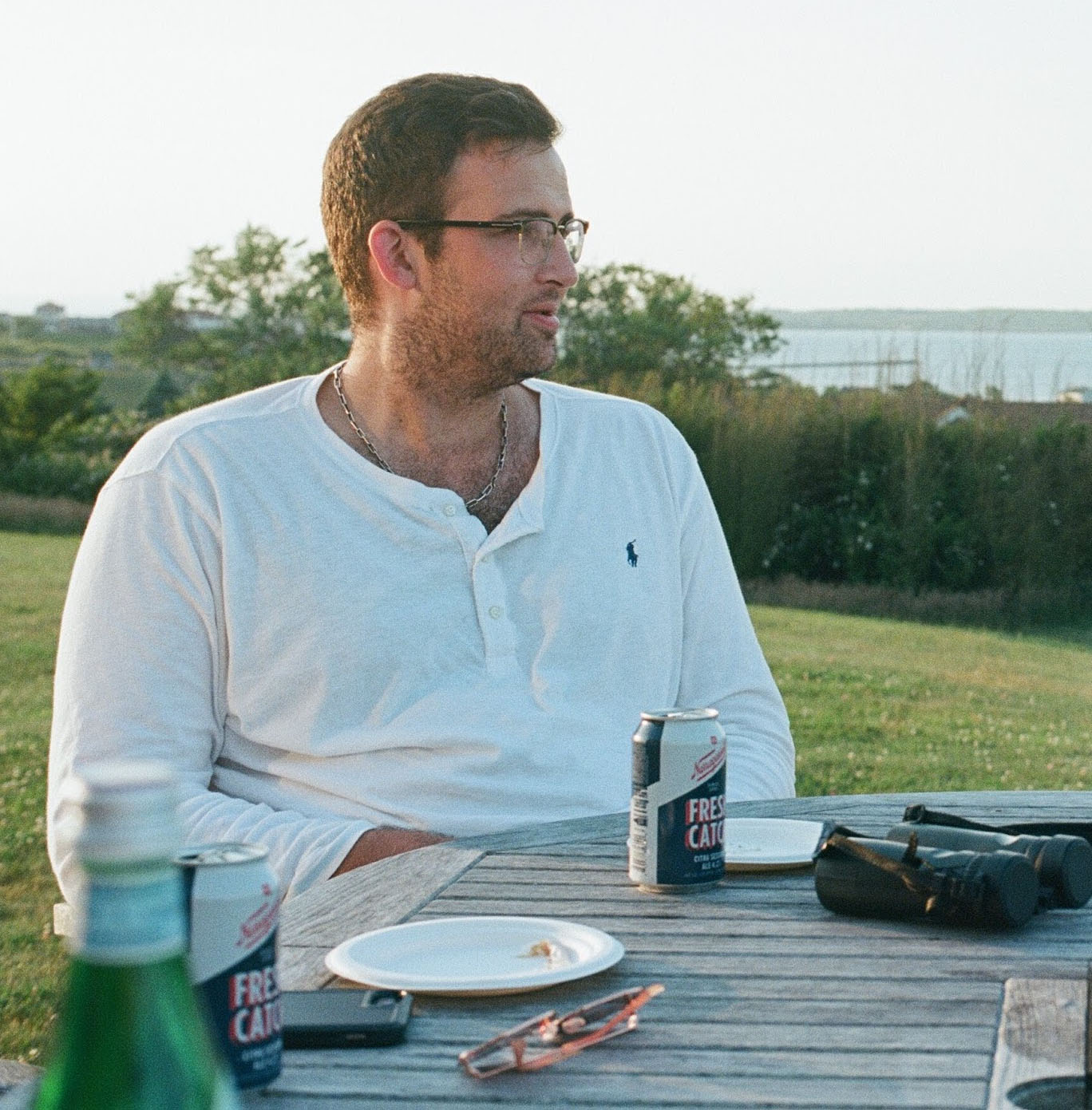
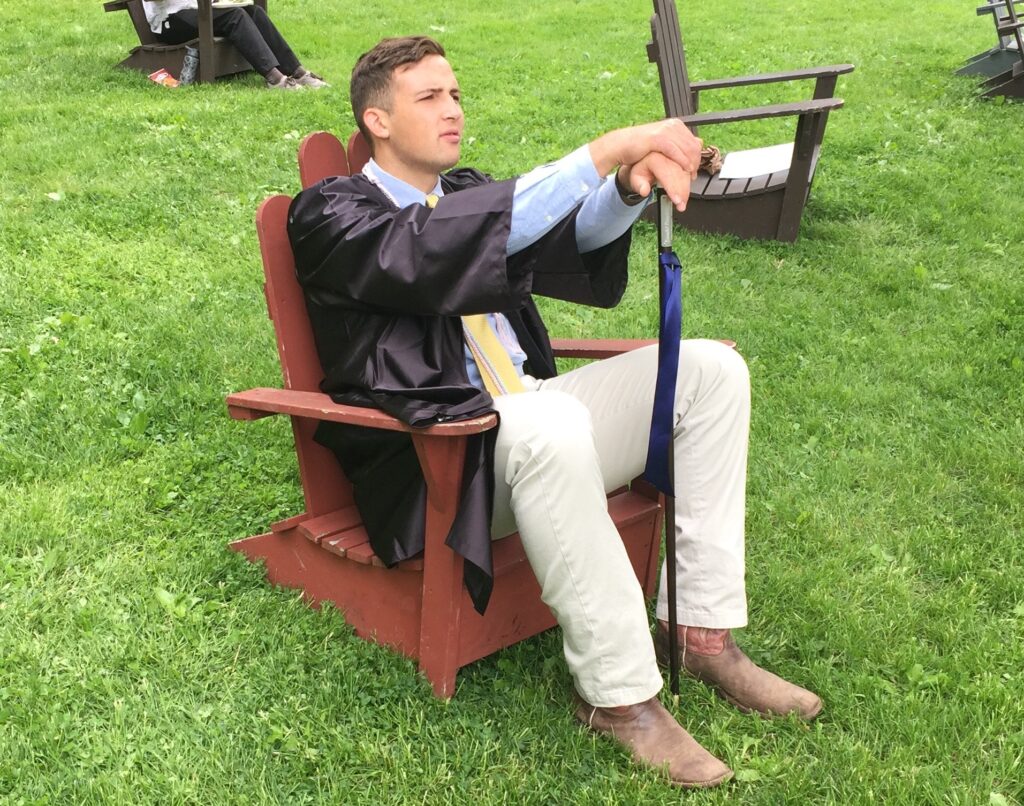
Editorial intern Ruby Salisbury ’27 talks with former NER intern Robert Erickson ’18 about developing a critical vocabulary, adjusting to life post-Middlebury, and the value of humility.
Ruby Salisbury: Where are you now, geographically and professionally?
Robert Erickson: I moved to New York shortly after graduating from Middlebury—first to Brooklyn, then to Queens, where I live now. I’m currently a senior editor at The New Criterion, a monthly review of arts and letters based in Manhattan.
RS: What were some of the steps that got you from Middlebury to where you are today?
RE: Well, the first step was having no idea what I’d do after graduation! I graduated from Middlebury in 2018 and had applied in March of that year for a year-long intensive Latin program in the Roman countryside. Being Italian, the organizers weren’t in much of a hurry to announce the results, and I didn’t find out until September (for a program starting in October) that I hadn’t made the cut. So I was scrambling.
I set my sights on living in New York, because I knew I wanted to pursue literary or arts-related work. I first heard about The New Criterion (TNC) from a friend I’d made during a summer internship at St. Paul’s School in New Hampshire. He was a full-time TNC editor at this point, and he advised me to apply for the magazine’s fellowship program. I applied and got the job, which began in June 2019. (I landed a teaching job in NYC for the interim, at a charter school in the South Bronx, which went terribly.)
My TNC fellowship ended in June 2020, during the craziness of COVID, which meant that I hadn’t seen my colleagues in person since March—a rather deflating end. I signed on for a post-baccalaureate in classics at Columbia for 2020–21. In May 2021, I learned there was a full-time opening at TNC, and I jumped at the chance. I’ve been working here ever since.
RS: What was a highlight of your time at the New England Review?
RE: What wasn’t a highlight? I’d start with the fact that it was a summer internship—I firmly believe that every Midd student should be required to spend a summer in Vermont. I loved everything about the NER office, from the inviting yet serious tone cultivated by Carolyn and the other editors, to the cozy wood paneling and supreme reading nook, to screening poetry submissions. My co-intern, Victoria Pipas, was a delight to work with, too.
What’s stuck with me the most, though, was probably the experience of reviewing fiction submissions with Jennifer Bates, who was one of NER‘s fiction editors at the time. We read and discussed ten submissions per week. Anyone who’s reviewed over-the-transom submissions knows that it’s like looking for a needle in a haystack; over the whole summer, I think we found one story that might have been up to snuff! But the rejects generally weren’t bad: most just mediocre, and many quite good. The experience taught me how exacting an editor needs to be, and Jennifer expertly guided us in developing a vocabulary of critique. It’s not enough to say that a story “feels off” or “doesn’t have it,” especially when others are involved in the selection process. You need to pinpoint where, why, and how a piece of writing comes short, and be able to communicate that.
RS: What is it like to work as an editor for The New Criterion? Does your experience reflect what you learned at Middlebury?
RE: I’m very lucky to have landed at TNC, because we have a lot of luxuries that other magazines and newspapers don’t. One is that we’re largely donor-funded, which means that we’re not so dependent on clicks or ad revenue (and subscriptions to a lesser degree). Those contingencies have driven a lot of worthy magazines to the lowest algorithmic denominator in the internet age, if not killed them outright. We’re fortunate not to have to push clickbait or stay ahead of news cycles, and we have a good deal of flexibility in how we make assignments. In covering a new book, for instance, we have the leeway to publish a review a few months late but written by the right author for the job—perhaps he or she couldn’t get to it earlier—instead of a review that’s rushed to meet the book’s pub date and penned by our third or fourth choice. Alternatively, if there’s a new book that’s getting a lot of press but really isn’t all that interesting, we can skip it.
Another aspect of TNC that suits me is the monthly publication schedule: fast enough to offer plenty of variety over the course of the season, but slow enough for us to give each piece the attention it deserves. I don’t think I could hack it at a weekly or even biweekly publication, much less a newspaper.
I mentioned earlier how my time at NER impacted my development as an editor. More generally, the liberal arts education I received at Middlebury is pretty well aligned with TNC‘s editorial remit. In addition to nonfiction, fiction, and poetry, we cover a fairly broad swath of the arts—theater, dance, classical music, painting, sculpture, architecture, and a few other disciplines. As a Middlebury student I enjoyed thinking of myself as a jack of all trades, master of none. Maybe that was a generous estimation of my abilities, but my current position has let me keep up the delusion.
RS: What is a skill you developed from studying classics and literary studies as an undergraduate that most benefits you today in your professional work?
RE: Apart from the obvious answers of reading, writing, and meeting deadlines, I’d say that the “skill” that has benefited me the most isn’t really a skill at all, but an approach. I think of my advisors—Stephen Donadio for the program in literary studies and Pavlos Sfyroeras for classics—and how they combined a serious approach to literature with a total humility and openness to discovery.. Donadio in particular seemed to have read everything ever written, most of it twice, yet he and Pavlos never made us feel like anything less than colleagues.
I remember one day we were reading aloud from Ulysses in Donadio’s senior colloquium when, mid-line, he broke out in a chuckle. The class was puzzled. He had been tickled, as he explained, by a joke that he hadn’t caught before. Something about the Englishman Haines and a political pun on “rising”—it had obviously gone over our heads. As he spelled it out for us, it occurred to me that he couldn’t have read that passage fewer than fifty times before—and the joke had gone over his head all those times, too. More than the humor itself, I think his real delight was in getting the joke as we were, for the first time.
That kind of humility is crucial in any literary endeavor, because the medium is at once very public and very intimate. In journalism especially, we tend to think of an audience as the collection of everyone reading whatever it is you’ve written or edited, and we try to monitor their aggregate reaction. But your audience is also each of those readers, individually, reading you alone. A few of them will be smarter, better read, and more thoughtful than you, too—which is frightening yet gratifying. The best authors and editors have the humility to realize who their better readers might be, and will write and publish accordingly. It’s also good form to extend the same courtesies to your lesser readers.
RS: What advice would you give to recent graduates trying to translate their studies into the professional world?
RE: For budding authors, I’d say that you definitely shouldn’t expect to make a living with your writing. Find a job that brings you close to the things you care about—literature, art, music, nature, whatever—and, more importantly, close to other people who care about them. Write for yourself and for those people first, and wider recognition will follow.
For any Midd student: Prepare to be let down, because most of the world doesn’t care about the things that you’ve studied and loved. A collective space to mull over, analyze, dissect, and simply appreciate has to be won with effort; it doesn’t crop up on its own. I don’t think I understood how rare a place like Middlebury is when I was there, and I certainly didn’t appreciate the sustained effort of the generations of teachers and students that built it. Coming down from that mountaintop can be depressing. The real challenge of the professional world is finding a way to poke your head above the clouds again.